Road collisions represent one of the most unpredictable and disruptive events a fleet operations manager can encounter. When a commercial vehicle is involved in a crash, the immediate aftermath triggers a high-stakes sequence of logistical, financial, and legal challenges. Beyond the initial shock of the event, fleet leadership must navigate a complex recovery process that balances asset preservation, driver safety, insurance negotiations, and operational continuity. The true cost of a fleet accident extends far beyond physical repair quotes; indirect costs such as vehicle downtime, lost cargo revenue, elevated insurance premiums, and potential legal exposure often outweigh the direct repair bill.
Managing post-accident fleet maintenance requires a highly structured, repeatable framework. Treating a major commercial vehicle collision like a routine maintenance ticket leads to missed structural defects, delayed insurance settlements, and prolonged downtime. By establishing clear protocols from the moment an incident occurs to the final return-to-service sign-off, fleet managers can safeguard their capital investments, protect their organization from long-term liability, and ensure that repaired vehicles return to the road operating at peak safety and performance standards.
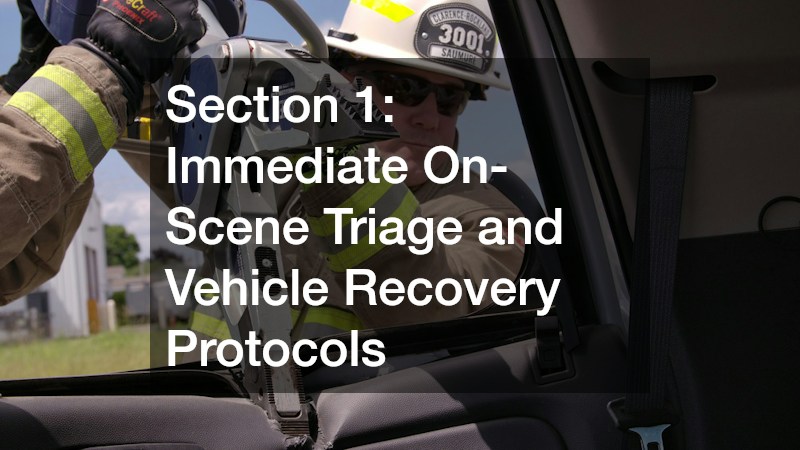
Section 1: Immediate On-Scene Triage and Vehicle Recovery Protocols
The critical first phase of post-accident vehicle management begins while the asset is still on the shoulder of the highway. Immediate scene command is vital for gathering accurate diagnostic information, mitigating further damage to the vehicle, and ensuring the safety of all involved parties. Fleet managers must equip their drivers with standardized post-accident protocols, ensuring that key vehicle metrics, telematics fault codes, and high-resolution photographs of the damage are captured before any towing or clearing operations take place.
When a vehicle suffers major operational disablement, managing the physical removal of the asset requires specialized oversight. Heavy-duty commercial units cannot be retrieved using standard light-duty recovery equipment without risking severe secondary damage to the frame rails, axles, or drivetrain components. Dispatching an experienced tow truck operator who understands commercial weight distribution and frame integrity is essential. Incorrect hook-up procedures or dragging a locked differential can turn a manageable body repair job into a total drivetrain replacement, significantly expanding overall repair costs and time off the road.
For minor incidents or low-speed fender benders where structural integrity remains intact, immediate full-scale towing to a body shop may not be required. In these scenarios, fleet managers often leverage mobile fleet service repairs to conduct on-site mechanical stabilization and preliminary safety audits. Having a mobile technician assess fluid leaks, braking system pressure, and tire seating directly at the scene or at a nearby holding yard helps determine whether the vehicle can be safely driven to a central facility under its own power or if it requires full flatbed transport.
-
Driver Field Triage: Drivers must secure the scene, capture comprehensive photo documentation of all four quadrants, and record environmental factors before vehicle movement.
-
Recovery Selection: Match the recovery vehicle capacity directly to the gross vehicle weight rating (GVWR) of the disabled asset to prevent structural framing torque.
-
On-Site Mechanical Checks: Verify critical fluid containment, air brake line integrity, and steering Linkage connections before authorizing short-distance repositioning.
Section 2: Comprehensive Damage Assessment and Structural Inspection
Once the vehicle arrives at a secure holding yard or repair facility, the formal inspection process begins. Visual walk-around inspections are fundamentally insufficient for modern commercial vehicles. High-impact collisions generate kinetic energy that travels along the structural frame, frequently causing hidden deformation in components located far from the primary point of impact. A rigorous tear-down assessment is necessary to expose hairline frame cracks, cross-member twisting, suspension misalignment, and hairline fractures in housing assemblies.
Partnering with the right facility is pivotal during this phase. Fleet managers must evaluate whether an auto body shop possesses the specialized frame-straightening equipment, high-tonnage hydraulic pulls, and certified technicians required for heavy-duty commercial restoration. Selecting a facility with industry-recognized credentials ensures that structural repairs adhere strictly to Original Equipment Manufacturer (OEM) safety specifications rather than quick, cosmetic patch jobs that compromise long-term durability.
Choosing authentic truck parts preserves factory warranties, guarantees exact mechanical fitment, and maintains high resale value. However, in times of supply chain disruptions, sourcing certified heavy-duty aftermarket equivalents for non-critical body panels or brackets can shave weeks off repair delays without compromising safety.
-
3D Frame Measuring: Utilize computerized laser measuring systems to detect millimeter-level frame sway, sag, or twist across the chassis.
-
Component Inventory Audit: Map out every damaged bracket, sensor mount, and mechanical fastener during initial tear-down to avoid ordering delays mid-repair.
-
Drivetrain Stress Analysis: Inspect drive shafts, universal joints, and differential housings for stress fractures caused by sudden impact deceleration.
Section 3: Managing Driver Health, Injury Claims, and Fleet Legal Liability
Vehicle maintenance and driver health management are deeply intertwined following a commercial road incident. A fleet manager’s responsibility extends beyond iron and aluminum; the human element directly impacts administrative downtime, workers’ compensation claims, and overall liability exposure. Even minor collisions involving minimal visible damage to the vehicle cab can transfer substantial g-force energy directly to the driver’s body, making thorough post-collision medical evaluations mandatory.
Soft-tissue injuries represent one of the most frequent health complications arising from rear-end or sudden deceleration incidents. Conditions such as whiplash may not present severe symptoms immediately at the crash site, often manifesting hours or days later. Establishing immediate medical screening protocols protects drivers’ long-term health and creates a verifiable, timeline-accurate medical record. This documentation is essential when insurance adjusters evaluate the physical impact forces involved in the accident against reported personal injury claims.
From a corporate risk perspective, commercial vehicle collisions frequently attract intense legal scrutiny from third parties and regulatory bodies. Retaining experienced truck accident lawyers early in the post-accident process ensures that the fleet’s operational records, telematics data, maintenance logs, and driver history are properly preserved and legally protected. Legal counsel assists fleet managers in navigating complex multi-party liability disputes, managing communications with opposing insurance carriers, and ensuring that post-accident vehicle inspections are conducted in compliance with evidentiary standards.
-
Mandatory Health Clearances: Require formal medical clearance for drivers prior to authorizing their return to commercial driving duties, regardless of perceived crash severity.
-
Telematics Data Preservation: Download and archive all engine control module (ECM) data, video dashcam footage, and speed logs immediately following an incident.
-
Chain of Custody Control: Maintain strict documentation of all vehicle modifications, part replacements, and inspection reports to defend against spoliation of evidence claims.
Section 4: Rebuilding and Customizing Fleet Assets Post-Repair
Major repair projects present a unique operational window for fleet managers. When a commercial unit undergoes extensive body and structural work, it is often cost-effective to re-evaluate the vehicle’s functional setup rather than simply restoring it to its pre-crash state. As route requirements, cargo profiles, and operational demands evolve, post-accident reconstruction allows managers to make strategic upgrades that improve efficiency, driver ergonomics, and load distribution.
A key decision point during major structural restoration involves reviewing the unit’s overall utility profile. Depending on the extent of rear or side damage, managers may reconsider their original truck body selection, choosing to switch from a standard dry box to an insulated reefer, an open flatbed, or a specialized service body that better serves current route demands. Upgrading structural materials—such as moving from standard steel cross-members to lightweight composite or high-strength aluminum alloys—can increase payload capacity while offering superior corrosion resistance over the remaining lifecycle of the asset.
In addition to major structural changes, outfitting the vehicle with specialized auxiliary hardware enhances daily operational safety and efficiency. Collaborating with suppliers of local truck accessories allows fleet teams to source tailored toolboxes, custom ladder racks, reinforced bumper guards, and ergonomic step systems with short lead times. Installing these upgraded components while the vehicle is already disassembled reduces overall installation labor costs and ensures that the asset returns to service significantly better equipped for driver comfort and workplace accident prevention.
-
Weight Distribution Review: Recalculate axle weight ratings when changing body styles to ensure compliance with federal bridge formula regulations.
-
Ergonomic Enhancements: Integrate non-slip grab handles, low-profile boarding steps, and integrated cargo tie-down tracks during body reassembly.
-
Modular Storage Upgrades: Replace damaged interior shelving with adjustable, heavy-duty composite modular racking systems to optimize cargo volume.
Section 5: Paint Work, Cab Upgrades, and Surface Protection
The final stages of physical vehicle restoration focus on cab environment restoration, paint matching, and surface protection. A professionally repaired fleet vehicle must not only be structurally sound, but it must also project a professional corporate image on the road. A poorly matched paint job or weathered, misaligned cab panels reflect negatively on the business and can accelerate rust formation and body degradation in harsh weather environments.
Before fresh paint or vinyl graphics are applied to repaired panels, thorough decontamination of the cab and exterior structure is mandatory. Running the unit through a commercial auto car wash equipped with high-pressure undercarriage blasters removes residual road salt, chemical residues, metal shavings, and glass fragments left over from the collision or shop floor. Ensuring a pristine, contaminant-free surface is essential for proper paint adhesion and prevents clear-coat peeling down the road.
Inside the cab, driver comfort, visibility, and environmental control should be prioritized during restoration. Upgrading cab glass by utilizing a professional auto glass tinting service helps regulate interior temperatures, reduce glare during long hauls, and block harmful ultraviolet rays. High-quality window films also add a layer of shatter resistance to side windows, offering extra driver protection in the event of future roadside debris impacts or side collisions.
-
Color-Matching Audits: Use spectrophotometer technology to match newly painted panels with existing, UV-weathered factory paint across the rest of the chassis.
-
Environmental Sealing: Inspect and replace all rubber door gaskets, cab mounts, and window seals to eliminate wind noise and moisture intrusion.
-
Branding Uniformity: Apply fresh, high-visiblity reflective corporate decals and DOT regulatory numbers using durable 3M vinyl sheeting.
Section 6: Returning Vehicles to Service: Testing and Preventative Protocols
Reintegrating a heavily repaired unit into daily fleet operations is a critical step that requires careful validation. Placing a vehicle directly back onto an active delivery route without rigorous testing exposes the fleet to recurring breakdown risks, driver safety hazards, and premature component failure. Fleet managers must implement a formal return-to-service testing protocol that covers electronic systems, mechanical assemblies, and driver feedback.
Modern commercial vehicles are equipped with complex Advanced Driver Assistance Systems (ADAS), including radar-based automatic emergency braking, lane departure warning cameras, and blind-spot monitoring sensors. Following an accident and subsequent body repairs, these systems must be recalibrated using specialized alignment targets and diagnostic software. Uncalibrated or misaligned ADAS sensors can trigger false collision warnings or fail to activate during an actual emergency, creating severe safety risks for the driver and surrounding traffic.
Before final clearance is granted, the asset must complete a multi-point road test and administrative sign-off process:
-
Dynamic Road Testing: Conduct a 30-mile test drive under fully loaded conditions to test braking response, steering tracking, and suspension stability.
-
Diagnostic System Scans: Perform a full electronic sweep of all onboard control modules to confirm zero pending fault codes or communication errors.
-
Documentation and Audit Clearance: Archive all repair work orders, frame alignment certificates, ADAS calibration logs, and insurance sign-offs in the central fleet management software.
-
Driver Feedback Integration: Schedule a mandatory post-first-route debriefing with the driver to catch minor operational complaints before they turn into major repair issues.
Understanding How Fleet Vehicle Maintenance After Accidents
Managing commercial fleet vehicle maintenance following a road accident is a multidimensional process that demands strong leadership, clear procedures, and strategic vendor partnerships. From the initial moment an incident occurs on the highway to the final ADAS calibration before route reassignment, every step in the recovery chain directly impacts asset longevity, operational profitability, and legal standing. Fleet managers who approach post-accident recovery with structured diligence protect their capital investments while upholding the highest standards of roadway safety.
By treating post-collision repairs as an opportunity to review asset configurations, upgrade safety features, and refine internal fleet policies, organizations turn operational disruptions into long-term resilience. Establishing strong relationships with certified repair facilities, legal experts, and maintenance specialists ensures that when the unexpected happens, your fleet is prepared to recover quickly, control costs, and keep moving forward.